
Letter Name vs Sound - Everything You Need to Know

If your child is starting Reception, one of the most important things to get your head around is the difference between a letter’s name and its sound. Even if your child is moving into Year 1 or Year 2, this is still something they need to know and the more confident you are with it, the easier it will be to support them at home.
The tricky part? Not all literacy programmes in schools teach letter names straight away. That can leave room for confusion, especially when it comes to spelling. The good news is that with a little practice at home, you can make sure your child has the skills to read and spell accurately.

Letter Names vs Letter Sounds
A letter name is what we call the letter.
For example: the letter B is called “bee”.
A letter sound is the sound it usually makes in a word.
For example: b as in bat.
Here are a few more examples:
The letter C is called “see” but its sound is k (as in cat).
The letter M is called “em” but its sound is mmm (as in map).
What about vowels?
Vowels are especially important because they each have two versions:
Letter name (often called the “long vowel” sound)
Letter sound (often called the “short vowel” sound)
Here’s a quick guide:
A = name: “ay” | sound: “a” as in apple
E = name: “ee” | sound: “e” as in egg
I = name: “eye” | sound: “i” as in insect
O = name: “oh” | sound: “o” as in octopus
U = name: “yoo” | sound: “u” as in umbrella

Why does it matter?
Your child needs letter sounds to:
Decode (read) words
Encode (spell) words when writing
But they also need letter names to:
Spell aloud with accuracy (e.g. when asked “How do you spell dog?” they’ll say “D – O – G”)
Avoid confusion with tricky letters like M and N, or B and D
Build confidence when talking about words in class
In other words: sounds unlock reading, and names unlock spelling. Both are essential.
How you can support at home
Say both together: when you introduce a new letter, give both its name and sound:“This is called B and it makes the sound /b/ ”.
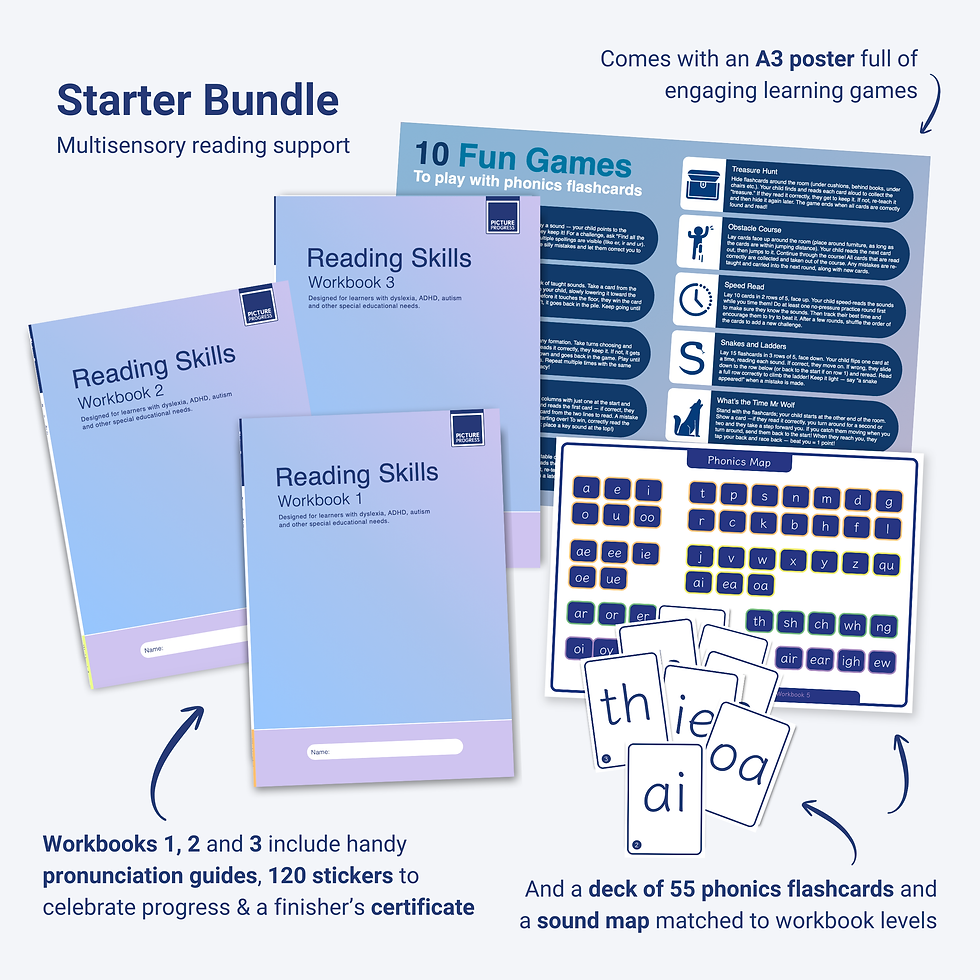
Spot the vowels: use the Reading Skills workbooks to practice identifying letter names and their sounds.
Make it fun: use the phonics flashcards and games poster to play learning games.
Final thought
Learning to read and spell is about building a toolkit. Letter sounds help children unlock words on the page, while letter names give them the confidence to spell and communicate about language. Together, they’re the foundation your child needs to read and write, and with a little practice at home, you’ll give your child the best start.
If you have any questions, message me on the chat box or email me at info@pictureprogress.com, I'd love to help! 👋


Comments